Crimson Sphere Quest Runner
Reviews
Description
Core Objective and Flow
Each level in Crimson Sphere Quest Runner presents a straightforward goal: locate a hidden key and then navigate to the exit door. The key is always placed somewhere within the stage, requiring players to explore and plan their route. Once the key is collected, the exit becomes accessible, and the player must reach it without losing all their lives. This simple loop forms the foundation of the entire experience, with each new level introducing fresh layouts that test the player's ability to adapt.
Obstacle Design and Risk Management
Throughout the levels, players encounter various hazards that must be avoided. These obstacles are placed strategically to create moments of tension and require precise movement. The game includes a life system: colliding with a hazard costs one life. If all lives are lost, the level must be restarted. To counter this, special collectibles appear in the stages that restore a life. Deciding whether to take a risk to grab one of these items adds a layer of strategy to the otherwise straightforward progression.
Controls and Accessibility
The controls are designed to be simple and responsive. On a keyboard, players use the arrow keys to move left or right. On touch-enabled devices, tapping the left or right side of the screen achieves the same effect. A notable feature is the automatic jumping: the character jumps on its own when it reaches the edge of a platform. This removes the need for a separate jump button and lets players focus entirely on timing their movements and choosing the correct path. This design makes the game approachable for newcomers while still offering enough depth for experienced players.
Difficulty Curve and Player Growth
The challenge increases gradually as players advance through the stages. Early levels introduce basic layouts with few obstacles, allowing players to get comfortable with the controls and the key-collection mechanic. Later stages combine multiple hazards, tighter pathways, and more complex key placements. This progression encourages players to develop better planning skills and improve their reaction times. The game does not rely on random elements, so each level can be learned and mastered through practice.
Visual Style and Atmosphere
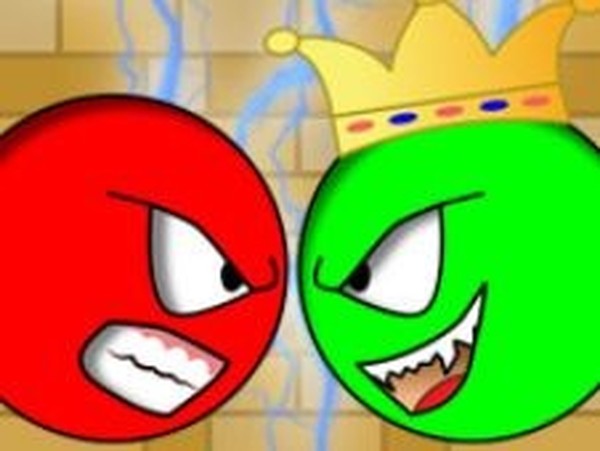
The game presents a clean, colorful visual style that is easy to read at a glance. The main character, a bright red sphere, stands out clearly against the backgrounds. Hazards and collectibles are also distinctly colored, making it simple to identify what to avoid and what to pursue. The overall aesthetic is cheerful and non-threatening, reinforcing the family-friendly nature of the experience. The sound design complements the visuals with gentle audio cues that signal key events, such as collecting an item or losing a life.
Replay Value and Mastery
Because each level can be replayed, players have the opportunity to improve their performance. The life system encourages careful play, but also allows for recovery through the collection of extra lives. This creates a satisfying loop of trial, error, and eventual mastery. The game does not include a timer, so players can take their time to study each layout and plan their approach. This design makes it suitable for both quick play sessions and longer, more focused play.






Player Comments
Sign in to comment
You must be logged in before posting a review or rating.
No account? Create one
No comments yet. Be the first to comment!