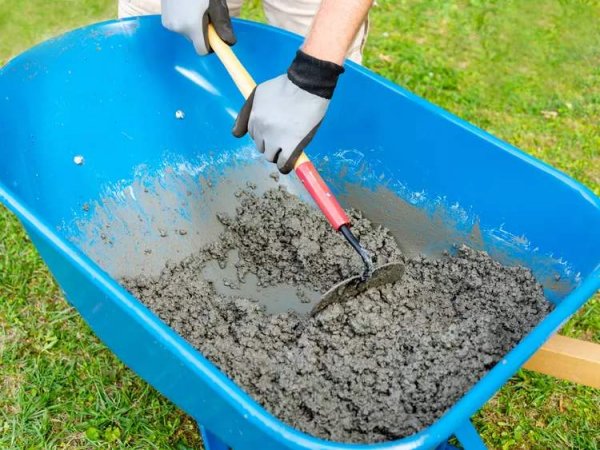
Mixing concrete by hand is a practical skill for homeowners tackling small projects like setting fence posts, pouring a small patio slab, or crafting custom countertops. While commercial projects rely on large mixers, a garden hoe, a wheelbarrow, and a clean water source are all you need for batches up to 100 pounds. This method is not only cost-effective—typically $10 to $20 per batch—but also gives you full control over the mix consistency.
The key to success lies in selecting the right product. Preblended bagged concrete mix is the go-to for structural tasks, as it contains the aggregate needed for strength. In contrast, sand mix or mortar mix are designed as bonding agents for brickwork and lack the durability required for slabs or footers. Hardware stores carry all three, but for most DIY repairs, concrete mix is the appropriate choice.
Batch size matters when mixing by hand. A single 50-pound bag is the most comfortable amount to work with, as larger quantities become physically demanding and risk hardening before fully mixed. The process takes about 20 to 30 minutes of active work, with a total time of one to two days before the concrete is ready for use.
Getting the Water Ratio Right
Water is the critical variable in concrete mixing. Too little water leaves the mix dry and powdery, preventing proper setting. Too much water, while making the pour easier, weakens the final product, leading to crumbling over time. Manufacturers specify exact water amounts, but most mixes tolerate up to two extra cups if needed. Always start with less water and add gradually to avoid a soupy mix.
For a 4-inch-thick slab, the water requirement scales with area: one square foot needs one 50-pound bag and 3.5 U.S. pints of water; two square feet require two bags and 7 pints; three square feet need three bags and 10.5 pints; four square feet use four bags and 14 pints; and five square feet call for five bags and 17.5 pints. These measurements serve as a reliable baseline, but always defer to the manufacturer's instructions on the bag.
Using a wheelbarrow as your mixing basin is recommended over a bucket. It provides ample space for mixing and allows you to transport the wet concrete directly to the pour site, saving time and effort. A large mortar tub is an acceptable alternative if a wheelbarrow is unavailable.
Step-by-Step Hand Mixing
Begin by cutting open the bag with a utility knife, holding it upright to minimize dust. Pour the dry mix into one side of the wheelbarrow, keeping it separate from the water. Measure the water in a clean bucket using a measuring cup, then pour it into the empty side of the wheelbarrow.
Using a garden hoe, gradually fold the dry concrete into the water, pulling small amounts at a time. Ensure each portion is fully incorporated before adding more. Continue mixing until no dry pockets or air bubbles remain. If working alone, brace the wheelbarrow by stepping on its stand or supporting the side with your knee to prevent tipping.
The ideal consistency is similar to peanut butter—firm but workable. Drag the hoe through the mix; the groove should hold its shape. If the mix is too dry, add water in small increments, up to two cups. If it's too wet, add a bit more dry concrete to stiffen it.
Once the concrete is poured, clean your tools immediately. Spray the wheelbarrow and tools with a hose to remove residue before it hardens. Quick-mix concrete begins to set in 20 to 40 minutes, so prompt cleanup is essential.
Maximizing Working Time
Because concrete sets quickly, you have roughly 20 minutes to mix and pour. To stay within this window, prepare everything in advance: have your hoe, shovel, water bucket, measuring cup, and hose within arm's reach. Mix as close to the pour site as possible to minimize travel time. Enlisting a helper—one to mix, one to add water and steady the wheelbarrow—can significantly speed up the process.
Wear protective gear, including safety glasses, a dust mask, and long sleeves and jeans to shield your skin from splashes. Jeans and long sleeves also protect against the abrasive nature of the mix.
Concrete reaches 1,000 psi within 24 hours and is typically usable after a day or two, though full curing takes 28 days. With careful attention to water ratio and timing, hand-mixing concrete is a reliable method for small-scale projects, offering both economy and control.