Homeowners looking to shave a few dollars off their monthly electricity bill often focus on swapping out old bulbs for LEDs. But two licensed electricians say the next step could be installing motion-activated lighting, which tackles one of the biggest sources of household waste: lights left on in empty rooms or outside all night.
Motion sensor lights use infrared technology to detect body heat moving across a space. When movement is sensed, the circuit closes and the light turns on; after a set timer without motion, it switches off. This automation removes the human error factor that often leads to wasted energy, according to Mark Halberg, a licensed electrician at Prairie Electric, and Tim Hodnicki, president of Electrical Experts.
“The biggest waste we see is outdoor lights left on all night or bathroom lights running in an empty house,” Halberg said. “Sensors cut that run time down to exactly when you need it.”
Where Sensors Deliver the Most Savings
Both electricians agree that the most effective spots for motion sensors are bathrooms and exterior lights. These are areas where lights are frequently forgotten, and the savings can be noticeable over months. For instance, a porch light left on for 12 hours can consume a significant amount of electricity, but a sensor limits its use to only when someone is present.
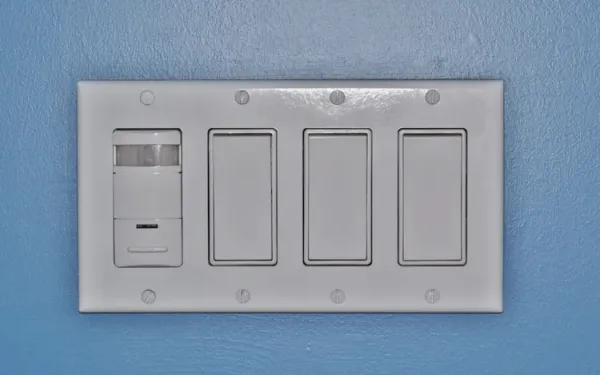
Indoors, Halberg recommends occupancy sensor switches for bathrooms and laundry rooms, which replace standard wall toggles and turn on automatically when someone enters. For bedrooms, he prefers vacancy sensors that require manual activation but will shut off automatically if forgotten.
Calibration and Bulb Choice Matter
While the concept is simple, Hodnicki cautions that overly sensitive sensors can reduce savings. “Motion sensor lights that are too sensitive and trigger frequently might not save as much energy as they could,” he said. Homeowners should review the owner’s manual to adjust the sensor’s range and timer for optimal performance.
Another factor is the type of bulb used. If a motion sensor fixture has a high wattage and low-efficiency bulbs, it could consume more energy than a standard fixture with a lower wattage and high-efficiency LEDs. Pairing sensors with LED bulbs is key to maximizing efficiency.
It’s also worth noting that motion sensors draw a small amount of power continuously to remain active. “Motion sensor lights are always drawing some amount of energy to power the motion sensor,” Hodnicki said. “So, even if your motion sensor light never turns on, it’s probably using at least a little more power than a static switch-operated light.” This standby draw is minimal, but it means the savings come from preventing wasted run time, not from the sensor itself being energy-free.
Outdoor and Indoor Installation Options
Outdoor security lighting is the most common residential use, according to Hodnicki. These floodlights can be integrated with smart switches and security cameras, allowing homeowners to see who or what triggered the light. Pathway lights, front porch, back porch, and patio lights are also good candidates.
Indoors, sensors can be placed in hallways, staircases, and other high-traffic areas. The cost of installation varies widely—from about $10 for a basic battery-operated unit to $500 for a professionally installed, feature-rich system. A simple battery-operated floodlight for the garage might cost around $40 or $50.
Ultimately, the decision to install motion sensor lights should be based on your household’s habits. If you or your family frequently forget to turn off lights, sensors can be a practical, low-cost upgrade that pays off over time. But for homes where lights are rarely left on, the savings may be negligible.