When dealing with electricity, the terms volts, amps, watts, and ohms are often used interchangeably, but they measure distinct aspects of electrical flow. Understanding these units is not just for electricians; it helps homeowners make informed decisions about appliances, wiring, and energy consumption. For instance, a lightbulb labeled “100W/120V” may seem cryptic, but once you grasp the relationship between these numbers, the mystery fades.
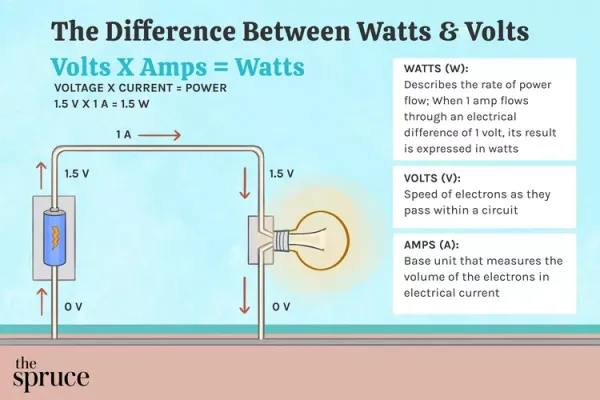
Voltage, measured in volts (V), represents the potential difference that pushes electrons through a conductor. In a hydraulic analogy, volts are like water pressure in a pipe. Current, measured in amps (A), indicates the volume of electrons flowing past a point, akin to the amount of water moving through the pipe. Power, measured in watts (W), is the rate at which electrical energy is used, calculated by multiplying volts and amps (V x A = W). Resistance, measured in ohms (Ω), is the opposition to electrical flow, similar to the friction that slows water in a narrow pipe.
The names of these units honor pioneers in electricity. The volt is named after Italian physicist Alessandro Volta, who invented the Voltaic Pile in 1800, an early battery made of alternating zinc and copper discs. The watt pays tribute to Scottish engineer James Watt, known for his improvements to the steam engine. These historical connections add depth to our understanding of everyday electrical terms.
How to Visualize Electrical Units
To make these concepts more tangible, consider the analogy of a car trip. If you say you drove 65 miles, you've given distance but not time. If you say you drove for 10 hours, you've given time but not distance. Only when you combine distance and time do you get speed, which is a rate. Similarly, volts and amps alone tell part of the story; watts combine them to show the rate of electrical power flow.
For example, a lightning strike can deliver about 20,000 amps, while a typical watch might draw only one-millionth of an amp. Household electrical circuits are usually rated for 15 or 20 amps. These figures illustrate the wide range of electrical currents we encounter in daily life.
Understanding wattage ratings is practical for choosing appliances. A clock radio or phone charger might use just a few watts, while a clothes dryer or electric oven can consume several thousand watts. An electric vehicle charger can draw up to 7,000 watts. By comparing wattages, you can estimate energy usage and operating costs.
Common Questions About Electrical Units
One common question is whether higher watts mean more electricity is used. The answer is yes: a 100-watt LED bulb uses far less electricity than a 750-watt microwave. You can observe this by watching your electric meter while switching between devices—the meter spins faster with the microwave.
Another frequent query is whether volts or watts are more powerful. In reality, both contribute to power; increasing either one increases the overall power. The question is somewhat moot because they are interdependent in the formula V x A = W.
For those working on home wiring, knowing these units is not just academic. It helps in selecting the right wire gauge, circuit breakers, and appliances, ensuring safety and efficiency. Whether you're a DIY enthusiast or a professional, a solid grasp of volts, amps, watts, and ohms is a foundational skill.
As electricity continues to power our homes and devices, understanding these basic units empowers consumers to make smarter energy choices and safer repairs. The next time you see a label with watts and volts, you'll know exactly what it means.