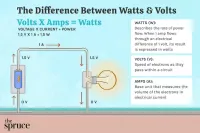
When it comes to electrical shock, the number of volts may not be the most critical factor—amperage is. While many people focus on voltage or wattage, such as a 60-watt light bulb, the real danger lies in the current, measured in amps. According to the U.S. Occupational Safety and Health Administration (OSHA), even small increases in amperage can mean the difference between a minor jolt and a fatal injury.
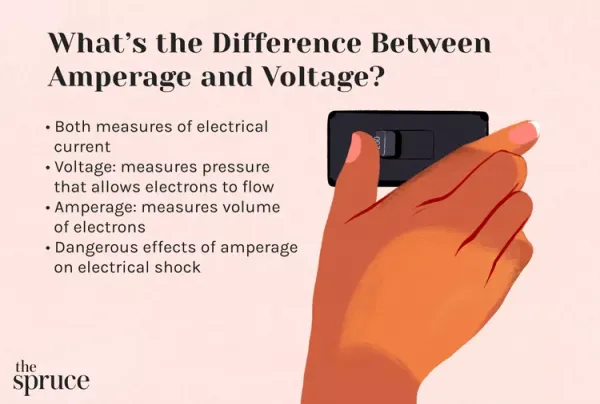
Voltage and amperage are two distinct measures of electricity. Voltage is the pressure that pushes electrons through a conductor, while amperage is the volume of electrons flowing. A 1,000-volt supply is not inherently more deadly than 100 volts if the current is the same. It is the amperage that determines the outcome of an accidental shock.
To visualize the relationship, consider a water hose with a spray nozzle. The water spigot's pressure represents voltage, the hose and nozzle represent resistance, and the resulting water flow is amperage. Opening the nozzle reduces resistance, increasing the flow of water—and it is the flow, not the pressure, that determines how soaked you get. Similarly, in an electrical circuit, it is the current that poses the greatest risk.
How Amperage Affects the Human Body
OSHA data show that even tiny currents can have significant effects. A milliampere (mA) is one-thousandth of an amp. A standard household circuit carries 15 or 20 amps—that's 15,000 to 20,000 mA. The effects of shock at various levels include:
- 1 to 5 mA: Little shock felt; upsetting but not painful.
- 6 to 30 mA: Painful shock; loss of muscle control.
- 50 to 150 mA: Extreme pain; possible severe muscle reactions; respiratory arrest; possible death.
- 1,000 to 4,300 mA: Heart ceases pumping; nerve damage; death likely.
- 10,000 mA (10 amps): Cardiac arrest; severe burns; death likely.
These figures highlight the danger inherent in the home wiring that is often taken for granted. A typical outlet carries enough current to be lethal if a person becomes part of the circuit.
Safety Measures for Electrical Work
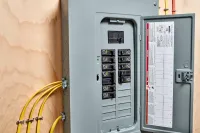
Preventing electrical shock requires following standard safety procedures. The most reliable step is to turn off the power at the breaker box before working on any circuit. After switching off the breaker, use a non-contact voltage tester—pre-tested on a known live circuit—to confirm the power is off. This is the only way to ensure the correct circuit has been deactivated.
Additional precautions include using insulated fiberglass ladders instead of aluminum ones, staying dry, and wearing rubber boots and gloves in damp conditions. Plugging tools into a GFCI outlet or extension cord adds another layer of protection. When working on the service panel, place a warning label on the face of the panel to alert others not to turn on circuits. Before restoring power, verify that no one is in contact with the circuit.
Understanding Watts and Ohms
Watts measure the rate of power flow. The equation Watts / Volts = Amps helps determine current requirements. For instance, a 5,000-watt electric dryer on a 240-volt outlet draws just over 20 amps (5,000 / 240 = 20.83). Ohms measure resistance in the circuit. The formula Ohms = Volts / Amps calculates resistance; a 120-volt circuit with 15 amps has 8 ohms of resistance.
Understanding these fundamentals not only clarifies how electricity works but also underscores why amperage is the critical factor in shock severity. By respecting the power of current and adhering to safety protocols, the risk of injury can be significantly reduced.