Knowing the electrical capacity of your home, measured in amps, is essential for planning renovations or adding major appliances. Most modern homes have 100 to 200 amps, but older residences may have as little as 30 amps, while large homes with electric heating can require up to 400 amps. This guide explains how to identify your service size and what it means for your household's power needs.
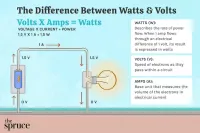
Electricity enters your home from the utility grid through two 120-volt service wires, which together provide 240 volts. The service can come via overhead lines that pass through a service mast and meter, or through underground cables that connect to the meter. From the meter, the power flows to the main service panel, the central distribution point for all branch circuits that power lights, outlets, and appliances.
Understanding the Main Service Panel
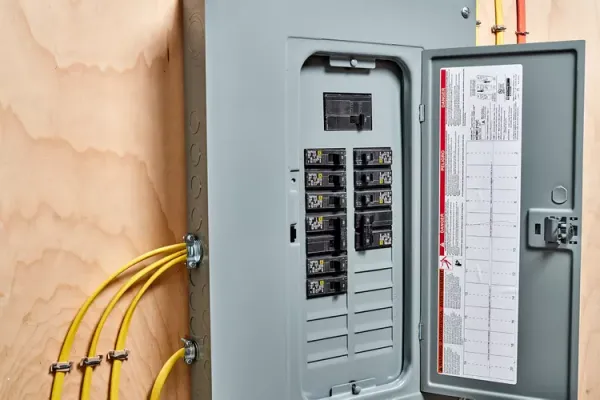
The main service panel, typically a gray metal box on an interior wall of a garage, basement, or utility room, houses two hot bus bars fed by a main breaker. Each bus bar carries 120 volts; circuits connected to one bar deliver 120 volts, while those connected to both provide 240 volts. In homes built after the 1960s, circuit breakers protect individual circuits, while older homes may still have fuse panels.
Fuse panels were common before 1960. A 30-amp fuse panel, installed before 1950, provides only 120 volts and is generally inadequate for modern usage. A 60-amp fuse panel, used from 1950 to about 1965, offers 240 volts but is still insufficient for most homes. Since the early 1960s, circuit breaker panels have been standard, with early versions providing 60 amps and newer homes often having 200 amps or more.
How to Check Your Service Amps
To determine your service size, start by inspecting the electrical meter outside. A glass dome on a square metal base typically indicates 100 amps, while a rectangular base extending below the dome suggests 150 amps or more. A round base the same size as the dome, or a flat glass window flush with an enclosed metal box, often indicates 60 amps.
Next, locate the main service panel, usually on the opposite side of the wall from the meter. Open the panel door (ensuring the floor is dry) and look for the main circuit breaker, which is larger than the branch breakers and controls power to the entire house. Its amperage rating—commonly 60, 100, 150, or 200 amps—is printed on the breaker. If your home has fuses, the main fuse block will have a metal handle; pulling it out shuts off all power.
Be aware that some homes have subpanels, which are secondary panels fed by the main panel. Subpanels typically have their own main breaker, but their amperage should not be added to the household total. The main panel's rating is what matters.
Planning for Adequate Capacity
When sizing electrical service for new construction or upgrades, electricians calculate the total expected demand of all appliances and fixtures, then add a safety margin. A 100-amp service can support a small home without electric heating, including an electric range and dryer. The current standard for new homes is 200 amps, which covers typical family needs but may not support large electric heating systems. Homes with electric heating or extensive additions may require 300 amps or more.
If your service is insufficient, you can increase capacity by upgrading wiring, replacing the main breaker with a higher-rated one, or, if you have an old fuse box, hiring a licensed electrician to install a circuit breaker panel. Always consult a professional for such work to ensure safety and code compliance.