Summer storms bring more than just rain and lightning—they can also pose a hidden threat to your home's appliances. Electric and appliance experts agree that running your dishwasher during a thunderstorm is a risk not worth taking, as a lightning strike can send a power surge through your home's wiring and damage the appliance's sensitive electronics.
Dishwashers are hardwired into your home's electrical system, making them particularly vulnerable to power surges caused by lightning, according to Thad Warren, head of marketing at EnergyBot. A close strike can instantly damage the control board, a costly component to replace, notes Dennis Godynuk, lead appliance expert at Comfort Appliance Repair.
Modern dishwashers rely heavily on electronics and computer-based controls, unlike older models that had more mechanical parts. Dan Mock, vice president of operations at Mr. Sparky, explains that if the "little computer gets fried" during a storm, the dishwasher is essentially done. This vulnerability is why experts strongly advise against using the appliance when thunderstorms are in the forecast.
What Happens If You Run the Dishwasher?
If a lightning strike occurs while your dishwasher is running, the resulting power surge can burn out the pump and control module. Godynuk recalls a homeowner who returned after a thunderstorm to find his dishwasher wouldn't drain or level—the surge had fried the internal components. Replacing a control board can cost around $500, making it far more economical to wait for the storm to pass.
Even if the storm isn't directly overhead, Warren warns that outages or surges can travel through the power grid and affect your home. "The storm may cause outages or surges that eventually trickle down to the transformers and other nearby equipment, potentially leading to a failure or surge that affects your home," he says.
Is There a Safe Setting During Storms?
Experts say there is no safe setting for running a dishwasher during a thunderstorm. Mock points out that even manual dishwashing in the sink carries risk, as water is a conductor of electricity. "Unless you have absolute lightning protection in your home, I would avoid water," he advises.
If you must use the appliance, Warren suggests using a surge protector rated for large appliances, but notes that most dishwashers are hardwired and not easily compatible. He recommends checking under the sink or counter for an outlet; if your dishwasher plugs in, you can attach a surge protector there. However, the safest option remains waiting until the storm passes.
Before and After the Storm: Protective Steps
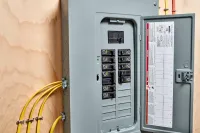
To safeguard your dishwasher, Godynuk recommends unplugging all large, nonessential appliances—including the dishwasher, microwave, and phone chargers—before a storm hits. "The only surefire way to protect your dishwasher is to cut its power," he says, suggesting either unplugging it or flipping its breaker off.
After the storm, Warren advises checking your appliances if there were visible lightning strikes in your area. "Make sure your breaker panel looks normal and there are no tripped breakers," he says. If your dishwasher shows signs of trouble—blinking lights, burning smells, or no power—it's best to call a technician before restarting it. Godynuk also recommends resetting any tripped breakers before plugging everything back in.
Other Times to Avoid Running the Dishwasher
Storms aren't the only time to be cautious. Experts advise against running the dishwasher during power outages, brownouts, or when power is flickering. Fluctuating voltage can overheat the control board, and low power during peak evening hours may leave detergent unactivated and dishes dirty, while putting extra stress on the motor over time.
Warren also suggests avoiding the dishwasher during peak electricity hours—typically late afternoon and early evening in summer—to save on energy costs. Additionally, he recommends not running the appliance when you're away from home or asleep, in case of a leak. "While rare, it's safer to be home and awake in case something goes wrong," he says.