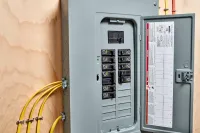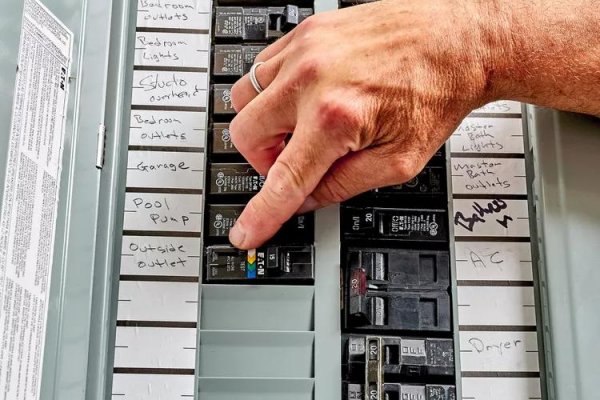
Adding a ground-fault circuit-interrupter (GFCI) or a dual-purpose AFCI/GFCI breaker to your home's service panel can provide whole-circuit protection against electrical shock and fire. This upgrade, which typically costs between $40 and $100 and takes 15 to 30 minutes for an experienced DIYer, is a common alternative to installing individual GFCI outlets. However, because the work involves exposure to live utility conductors, it is rated as an advanced project that demands strict adherence to safety protocols.
GFCI breakers monitor the flow of electricity and cut power if a ground fault is detected, helping to prevent electrocution. According to the Energy Education Council at the University of Illinois Extension, a GFCI can sense when a person's body begins to receive a shock and shuts off the power before injury occurs. In many areas, building codes now also require arc-fault circuit interrupter (AFCI) protection for general-use outlet circuits to guard against sparking and potential fires. For circuits needing both types of protection, dual-purpose AFCI/GFCI breakers are available and install in the same manner as GFCI-only units.
Before beginning, ensure the new breaker matches the brand and type of your service panel, as components from different manufacturers are not interchangeable. Also verify the voltage and amperage ratings: most branch circuits operate at 120 volts and either 15 or 20 amps. Use a 15-amp breaker for circuits wired with 14-gauge wire, and a 20-amp breaker for 12-gauge wire.
Key Differences from Standard Breakers
While both standard and GFCI breakers occupy a single slot and connect to the hot circuit wire (usually black), the neutral wire connection differs. With a standard breaker, the white neutral wire goes to the panel's neutral bus bar. With a GFCI or AFCI/GFCI breaker, the neutral circuit wire connects to a dedicated neutral terminal on the breaker itself. The breaker also comes with a preinstalled coiled white pigtail that must be connected to the neutral bus bar. Getting these connections right is critical: reversing the hot and neutral wires can disable GFCI protection, even if the test button works.
Installation Steps and Safety Precautions
Begin by switching the main breaker to OFF and removing the panel cover without touching any wires. Use a non-contact voltage tester to confirm zero voltage on several wires and breakers, including both terminals of a double-pole breaker. Remember that the utility service conductors and the lugs they connect to remain live even with the main breaker off—never touch them.
Remove a knockout plate on the panel cover if needed, using pliers. With the new breaker in the OFF position, connect the hot circuit wire to the terminal marked "HOT" or "LOAD," and the neutral circuit wire to the terminal marked "NEUTRAL." Then connect the breaker's coiled white pigtail to an open screw terminal on the neutral bus bar, ensuring only one wire per terminal and that all connections are tight.
Snap the breaker into place according to the manufacturer's instructions—most have a notch or foot that fits a mounting rail on the outer side, while the inner end clips onto the hot bus bar. After reinstalling the panel cover, turn off all branch breakers and any appliances on the new circuit. Switch the main breaker back ON, then turn on each branch breaker one at a time, including the new GFCI breaker, and test it as directed by the manufacturer.
When to Call a Professional
Although the technical steps are straightforward, the risk of fatal shock makes this a project best left to those fully confident in their electrical skills. Some local codes also prohibit unlicensed homeowners from performing this work. If you have any doubts or code restrictions apply, hiring a licensed electrician is a safe and affordable option—the job typically takes less than an hour.
For more detailed information, consult sources such as the University of Washington's guide on ground fault circuit interrupters, the National Association of Home Builders' state-by-state AFCI and GFCI requirements, and safety resources from OSHA and the U.S. Consumer Product Safety Commission.